Learn
Ratio and Proportion Calculator
A 3 by 4 photo enlarges cleanly to 9 by 12 - bigger, yet stubbornly the same shape. That sameness is a ratio at work, and the sentence $3 : 4 = 9 : 12$ tying the prints together is a proportion. This ratio and proportion calculator solves such sentences for the missing term: fill three boxes, click Calculate, and the fourth falls out by cross-multiplication. The ratio and proportion calculator asks for exactly those three.
Fill a : b = c : d; leave the last box blank to solve for it.
How to use this ratio and proportion calculator
Four boxes, one missing term. A proportion is two ratios locked in equality, . This ratio and proportion calculator finds the term you do not know. The boxes hold the terms in order, and the ratio and proportion calculator reads them as 'a is to b as c is to d'.
- First term (a) - the numerator on the left, like the width 3 of a small photo. Decimals work here too - the ratio and proportion calculator reads 2.5 just as happily.
- Second term (b) - the denominator on the left, that photo's height 4. Try 4. A ratio and proportion calculator needs b nonzero, as the third line below enforces.
- Third term (c) - the numerator on the right, say the enlarged width 9. Try 9. Keep c in the same units as a — the alignment the ratio and proportion calculator assumes.
- Fourth term (d) - the right denominator, and the term the ratio and proportion calculator solves for. Try 12. Change any of a, b, c and the ratio and proportion calculator re-solves d on the spot.
Click Calculate, and the ratio and proportion calculator comes back with three lines. For the preloaded example it prints 12, 0, and 0.75 - one per line.
- d, the missing 4th term - the ratio and proportion calculator computes it as , the cross-multiplication shortcut. For the defaults it prints 12, because .
- Cross-product difference - a lie detector. A result of 0 means really holds. Anything else, and the ratio and proportion calculator is telling you the four entries are not a proportion.
- Decimal value of a : b - the left ratio as one number. For 3 : 4 it prints 0.75. Whenever the difference line shows 0, the right ratio c : d reads the same 0.75. The ratio and proportion calculator rounds both decimal lines to six places, full precision underneath.
One limit: the form always solves d from a, b, c. If it sits elsewhere, ask the AI how to reposition the proportion so it lands in d. Then type the numbers it points at, and the ratio and proportion calculator does the arithmetic.
This page is more than a static ratio and proportion calculator - it is also an AI tutor you can ask questions:
- Ask in plain words. "A recipe serves 3 with 2 cups of rice; how many cups for 9 servings?" The AI solves it step by step right in the chat.
- Take a photo of your homework. The AI reads the proportion and types the terms in, and the ratio and proportion calculator returns all three lines, exactly as typed.
- Ask about ideas, not just numbers. "Why does cross-multiplication work?" gets a real explanation, while you can check every number against the ratio and proportion calculator on this page.
- Test a doubtful answer. Type all four terms and read the difference line - the ratio and proportion calculator confirms or vetoes your guess in one click.
- Keep asking follow-ups. The ratio and proportion calculator page keeps answering after the boxes are filled.
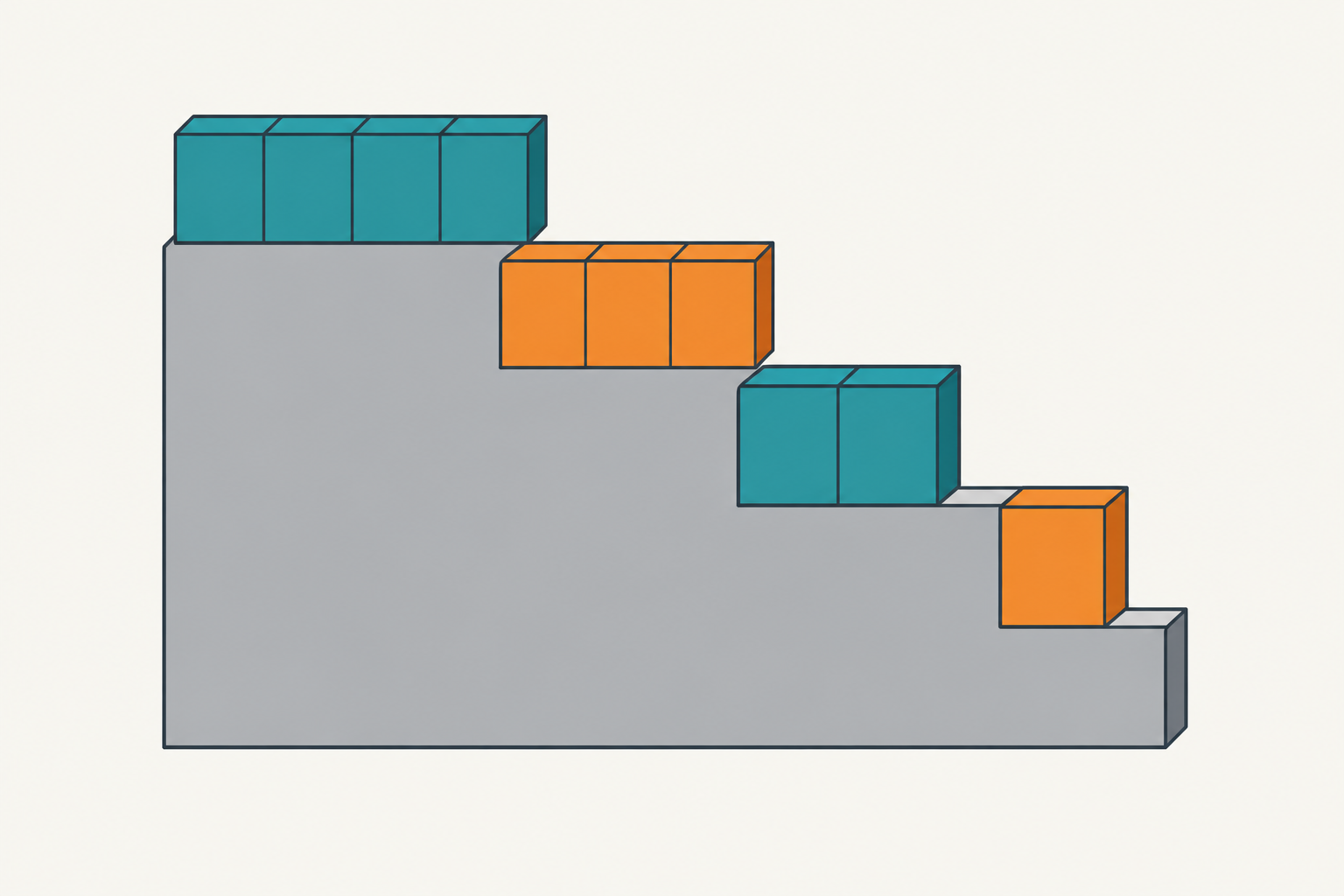
Ratio and proportion math: the two ideas this page ties together, and the ratio and proportion calculator runs on
A 3 by 4 print gets enlarged to 9 by 12. Bigger, certainly - yet the shape refuses to change. Both prints pair width to height at the same rate, so 3 : 4 and 9 : 12 are two spellings of one comparison. A ratio and proportion calculator is the tool that turns such a comparison into arithmetic. Fill in any three terms of it and the ratio and proportion calculator delivers the fourth.
What a ratio and proportion calculator checks: a 3 by 4 photo enlarges to 9 by 12 - every side was multiplied by 3, so the ratio 3 : 4 and the ratio 9 : 12 name the same shape
A comparison such as 3 : 4 is a ratio - two numbers tied by multiplication rather than subtraction. Ratios can be written 3 to 4, 3 : 4, or 3/4. An 1866 algebra text by Joseph Ray opens the topic with a sentence that still holds: "proportion is an equality of ratios." Every ratio and proportion calculator still runs on that definition. Set two ratios equal - , or - and you get a proportion. A ratio and proportion calculator is built to check exactly this kind of sentence. The picture shows that equality. Same ratio in, same shape out - a ratio and proportion calculator is, at bottom, a machine for verifying exactly that.
The four letters recur all over this page - they are the ratio and proportion calculator's box names:
Ray's wording: extremes first and last, means in the middle - the labels the ratio and proportion calculator's variable table repeats. His Proposition 1 is the engine of every ratio and proportion calculator: in every proportion, the product of the means equals the product of the extremes. Check it on the numbers he used: gives . A ratio and proportion calculator repeats that check on whatever four numbers you type. Line 2 of the form is precisely the comparison against , which is what the ratio and proportion calculator has been verifying all along. In modern symbols: . Every proportion is one multiplication from a linear equation, one division from the answer this ratio and proportion calculator prints. The ratio and proportion calculator performs that division as its first output line.
Three-term ratios and the ratio 3 numbers calculator
Ratios compare three or more numbers just as happily as two. A club with 12 freshmen, 18 sophomores, and 30 juniors has the three-term ratio 12 : 18 : 30. Simplifying divides every term by a common factor. The greatest common factor of 12, 18, and 30 is 6, so the ratio collapses to 2 : 3 : 5. That single division is the whole routine a ratio 3 numbers calculator automates; this ratio and proportion calculator's four boxes stay with the two-term case. Three-number work remains a hand routine.
The simplified ratio carries information the raw head count hides. In any group of 10 club members - that is - you will find 2 freshmen, 3 sophomores, and 5 juniors. This per-group reading is why three-term ratios show up wherever parts share a whole: recipes, paint mixes, prize splits. Splitting a whole by ratio is proportion math in action. Any two pieces of it form a pair, and the ratio and proportion calculator judges the pair on sight.
Three-term ratios fold back into proportion math, too. Described as freshmen against everyone else, the club reads 12 : 48, which simplifies to 1 : 4 - exactly the kind of statement a ratio and proportion calculator checks in one click. One dataset, several ratios, one consistent story, and proportion math is the bookkeeping that keeps the versions aligned. The ratio and proportion calculator takes any two-term pair such a split produces, and its difference line passes or fails it on the spot.
Example 1 - the missing fourth term, by cross-multiplication
Take the photo proportion . Three terms are known, and d is not. It is the exact setup the ratio and proportion calculator preloads in its boxes.
- Cross-multiply: . The product of the extremes meets the product of the means — the two products the ratio and proportion calculator compares.
- Simplify the right side: .
- Divide both sides by 3: . Line 1 of the ratio and proportion calculator says the same at a glance.
Check in the original sentence: and . The decimals agree, and line 3 of the ratio and proportion calculator shows the same 0.75. Type 3, 4, 9 into the ratio and proportion calculator and the first line returns exactly this . The ratio and proportion calculator has, in effect, done step 3 for you.
Run the ratio and proportion calculator from the answer side: type 4, 12, 3 into the first three boxes and line 1 hands back 9. The ratio and proportion calculator and the algebra agree from either end. Why? and : both rows scale by the same 3 so the cross-products check out twice over - in d = 12 and in 0.
Example 2 - solving backwards, and a fraction answer that stays
Now run the same machinery in reverse: . This time the unknown hides in a numerator, but cross-multiplication never asks which term is missing. The ratio and proportion calculator is equally indifferent to position - though its line 1 always reports d, so treat this one as a hand example.
- Cross-multiply: .
- Simplify: .
- Divide by 8: .
So . Leave the fraction alone. Rounding to a friendly 8 early wrecks the cross-product check - while , one full unit off. Watch the failure live on this ratio and proportion calculator: Type 8 into the d box and the difference line announces . Type instead, and the same line settles for 0 - line 2 acting as a checker, not just a solver. The ratio and proportion calculator, in other words, polices your rounding for you.
Fraction answers are not a defect; they are the exact value. Recross-check by hand, or type all four terms into the ratio and proportion calculator: line 2 settles it at 0. Respect for exactness is also why the ratio and proportion calculator rounds to many digits instead of two.
Common proportion mistakes this page exposes
Three slips cause most wrong answers, and the ratio and proportion calculator catches all three:
- Cross-adding instead of cross-multiplying. From , the products and both equal 36. The sums and compare 15 with 13 and prove nothing, and the ratio and proportion calculator will not bless them either - only the products and are locked together.
- Letting units drift out of position. A fuel proportion such as keeps miles in both numerators and gallons in both denominators. Flip one ratio and the equation compares incompatible units, so a ratio and proportion calculator would return a number wearing the wrong label. A ratio and proportion calculator cannot fix unit drift; only careful setup can.
- Dividing by a zero term. If a = 0, the cross products read , which constrains but never determines d. The first output line of this ratio and proportion calculator flags that case in words rather than a fake answer. A zero in a denominator means the proportion itself needs rethinking.
When you want slower, deeper practice, the site's solve-proportions guide and the proportion-formula walkthrough expand the algebra behind the cross-products rule. The ratio and proportion calculator compresses the same work into one click.
A recipe uses 2 cups of rice to serve 3 people. Tonight you invited 9 people. Set up the proportion and find x, the term the ratio and proportion calculator solves for. Then confirm the answer with the ratio and proportion calculator above: type 2, 3, 9 and read line 1.
A car covered 162 miles on 6 gallons of fuel. At the same rate, how far can it travel on 10 gallons? Write the proportion and solve for m, then let the ratio and proportion calculator check your m.
A 40-ounce batch of trail mix blends nuts, dried fruit, and chocolate in the ratio 5 : 3 : 2. How many ounces of each ingredient go into the batch? Simplify first, the way the ratio 3 numbers calculator section above does. The ratio and proportion calculator above checks the two-term slice in one click.
Frequently asked questions
What does a ratio and proportion calculator do?
It solves a proportion of the form $a/b = c/d$ when three of the four terms are known. You type three terms, and the ratio and proportion calculator applies cross-multiplication - to print the fourth. It also reads a : b as a decimal and checks whether four typed numbers really form a proportion - the whole routine this ratio and proportion calculator runs. That is all a ratio and proportion calculator is: three terms in, one term out.
How is this page different from a plain proportion solver?
A bare proportion solver hands you one number and stops. This ratio and proportion calculator shows the cross-multiplication behind the number. It flags the a = 0 case instead of failing silently, and an AI tutor explains any step you point at. In short, it is a ratio and proportion calculator that also teaches.
Can this proportions calculator handle decimals and fractions?
Yes. Decimal terms work as typed - $2.5/3 = c/6$ poses no problem, and the ratio and proportion calculator reads them without conversion. Fraction answers come back exact, as 65/8 rather than a rounded 8.125, and the cross-product difference line of the ratio and proportion calculator tells you whether the entries form a true proportion.
What is proportion math, in one sentence?
Proportion math is the field a ratio and proportion calculator works in. It covers the study of equal ratios, and the cross-products rule $a \\cdot d = b \\cdot c$ built on them. Its problems are the scaling kind - recipes, maps, photo enlargements - that the ratio and proportion calculator settles in one click.
How does the ratio 3 numbers calculator side simplify 12 : 18 : 30?
Divide all three terms by their greatest common factor. Here the factor is 6, so 12 : 18 : 30 becomes 2 : 3 : 5. The three-term section on this ratio and proportion calculator page traces the same example step by step. Any pair from it - say $12 : 18 = 2 : 3$ - can be typed into the four boxes above for a one-click cross-product check.
Why can't the first term be zero?
A ratio compares two quantities by division. 0 : b collapses to plain 0 - no comparison is left. In a proportion $a/b = c/d$, setting a = 0 turns the cross products into $0 = b \\cdot c$, which determines d only in the special case $b \\cdot c = 0$. The ratio and proportion calculator reports that dead end in words instead of inventing a value.